June 5, 2026
No Comments
Construction sites are among the busiest and most waste-intensive environments in modern infrastructure development. From residential projects and commercial buildings to industrial facilities and public infrastructure, construction activities generate large amounts of debris every day. Materials such as broken concrete, packaging waste, wood scraps, plastic sheets, metal pieces, dust, and general site waste accumulate quickly and require organized disposal systems to maintain safety and operational efficiency.
Managing construction waste effectively is not only important for cleanliness but also for worker safety, environmental responsibility, and project productivity. Without a structured waste collection process, debris can spread across work zones, creating hazards that affect movement, equipment operation, and site management.
One of the most effective solutions for handling construction waste efficiently is the use of Wheeled Dustbins. These mobile waste collection systems simplify debris handling, improve site organization, and support safer waste disposal practices.
Fiable Cleantech Limited provides durable waste management solutions designed to support modern commercial, industrial, municipal, and construction environments through practical and reliable sanitation products.
Construction projects generate waste at every stage of development. Site preparation, excavation, material delivery, installation work, finishing operations, and demolition activities all contribute to continuous debris generation.
When waste is not managed properly, construction sites can experience several operational challenges including:
Organized waste disposal helps maintain smooth workflows and creates safer working conditions across construction environments.
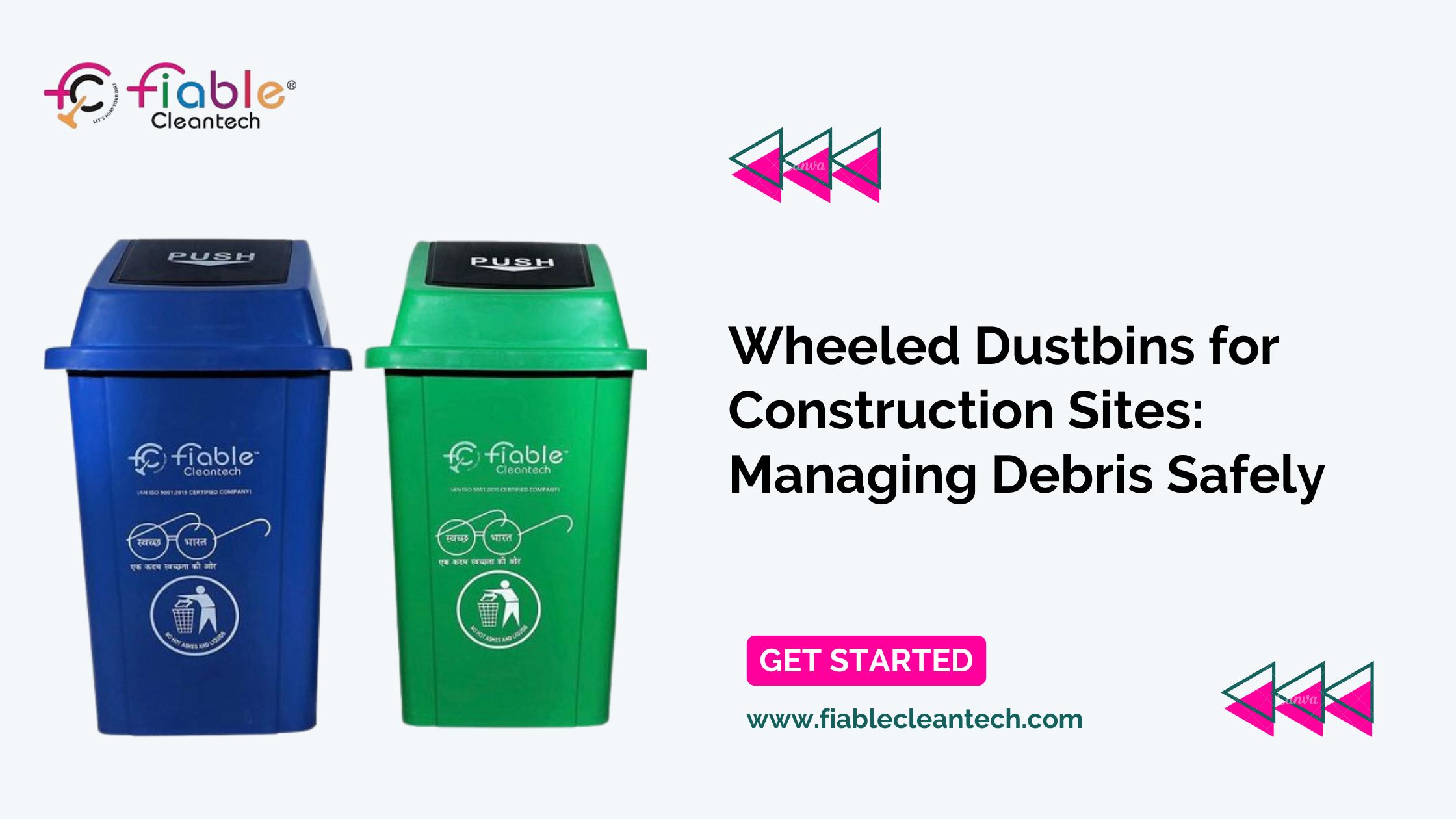
Wheeled Dustbins are mobile waste containers designed with integrated wheels that allow easy transportation of collected waste from one location to another.
Unlike fixed waste containers, wheeled dustbins provide flexibility and improve operational efficiency by reducing manual handling requirements.
These bins are manufactured using durable materials capable of handling rough usage, varying weather conditions, and frequent movement across industrial and outdoor environments.
Wheeled dustbins are commonly available in multiple capacities to support different waste management requirements.
Construction environments require practical waste handling systems because debris is continuously generated and site layouts frequently change.
Wheeled dustbins provide several advantages that make them highly effective for construction projects.
Construction work progresses across multiple areas during different project phases.
Wheeled dustbins can be moved easily to active work locations, allowing workers to dispose of debris immediately instead of creating temporary waste piles.
Mobile waste bins reduce unnecessary movement and improve collection speed.
Workers can focus more on project execution rather than transporting debris manually.
Loose construction waste creates slip and trip hazards.
Using designated wheeled waste containers reduces clutter and improves movement throughout the site.
Heavy debris transportation often increases physical strain.
Wheeled systems minimize lifting requirements and improve operational convenience.
Organized waste management improves overall project appearance and supports professional site management practices.
Construction sites generate different categories of waste.
Plastic wraps, cardboard, and protective coverings accumulate rapidly during material deliveries.
Small construction fragments require structured collection methods.
Cut sections and discarded wooden materials can be collected more efficiently.
Protective sheets, pipes, and packaging waste require organized disposal.
Food packaging, disposable items, and everyday operational waste also require designated disposal systems.
Using separate wheeled bins for different waste categories supports organized collection and easier disposal.
Selecting the appropriate dustbin can significantly improve site efficiency.
Construction environments demand durable materials capable of handling heavy usage.
Larger bins reduce collection frequency and support continuous operations.
Reliable wheels improve transportation across uneven construction surfaces.
Lids help contain waste and reduce exposure to dust and debris.
Practical designs simplify maintenance and sanitation.
Safety remains one of the most important priorities in construction management.
Construction debris often creates unnecessary risks including:
Wheeled dustbins contribute to safer working conditions by creating designated waste collection points throughout the site.
Cleaner work environments also improve employee awareness and overall site discipline.
Modern construction practices increasingly focus on environmental responsibility.
Proper waste collection supports sustainability by reducing uncontrolled dumping and improving recycling opportunities.
Wheeled dustbins help construction teams:
Construction companies that prioritize organized waste collection often achieve better operational outcomes and environmental performance.
Construction waste should not always be treated as a single category.
Segregation improves disposal efficiency and simplifies recycling processes.
Common segregation categories include:
Using multiple wheeled dustbins supports organized disposal practices and improves waste processing efficiency.
Although widely used for construction projects, wheeled dustbins are also highly effective across several industries.
Support efficient factory waste collection.
Improve waste management in business environments.
Support centralized waste collection.
Simplify public waste handling.
Maintain cleaner campuses.
Their mobility and practical design make them suitable for multiple environments.
Fiable Cleantech Limited supports organized sanitation and waste handling through durable and efficient waste management products.
The company offers solutions designed for:
Their product portfolio includes wheeled dustbins, industrial waste containers, garbage collection systems, municipal waste bins, and segregation solutions developed to support modern sanitation requirements.
By focusing on quality, durability, and usability, Fiable Cleantech Limited helps organizations maintain cleaner and safer environments.
As construction practices continue evolving, waste management systems are becoming more organized and efficient.
Future improvements are expected to focus on:
However, practical solutions like wheeled dustbins will continue to remain essential because of their flexibility and effectiveness.
Construction sites generate continuous waste that requires organized and reliable disposal systems.
Wheeled Dustbins provide an efficient solution for collecting, transporting, and managing debris while improving site safety and operational efficiency.
Their mobility, durability, and practical design help construction teams maintain cleaner environments and support structured waste handling practices.
With dependable waste management solutions from Fiable Cleantech Limited, construction projects can improve sanitation standards, reduce operational disruptions, and create safer and more productive work environments.
Wheeled dustbins help construction sites manage debris efficiently by improving waste collection, reducing clutter, enhancing worker safety, and supporting organized site operations.
Wheeled dustbins can collect various types of construction waste including concrete debris, plastic packaging, wood scraps, metal pieces, cardboard, dust, and general site waste.
They reduce loose debris accumulation, minimize slip and trip hazards, improve movement across work areas, and create designated waste disposal points for workers.
Important features include strong construction, high storage capacity, durable trolley wheels, easy mobility, weather resistance, and covered lids for better waste containment.
Fiable Cleantech Limited provides durable wheeled dustbins and waste management solutions designed to improve debris handling, support site cleanliness, and maintain safer construction environments.
Share with: