India’s urban landscape is undergoing a visible transformation. As cities expand and populations grow, the challenge of managing waste has become more complex and urgent. Public spaces from streets and markets to parks and transit hubs generate enormous amounts of waste daily. Traditional waste management systems, which relied heavily on manual collection and basic infrastructure, are no longer sufficient to handle this rising demand.
This is where public dustbin infrastructure is evolving. Indian cities are now investing in smarter, more durable, and more efficient waste collection systems. With the support of government initiatives and technological advancements, modern public dustbin infrastructure is becoming a key pillar of urban cleanliness and sustainability. Companies like Fiable Cleantech Limited are contributing to this transformation by providing reliable and high-quality waste management solutions.
The Need for Upgraded Public Dustbin Infrastructure
India generates millions of tonnes of municipal solid waste every year, and urban areas are the biggest contributors. Rapid urbanization, changing consumption patterns, and increasing population density have significantly increased waste generation.
However, one of the biggest challenges has been the lack of adequate public dustbins and inefficient waste collection systems. In many areas, the absence of proper infrastructure leads to littering, overflow of waste, and unhygienic conditions.
Upgrading public dustbin infrastructure is therefore not just about adding more bins—it is about creating a smarter, more organized system that supports sustainable waste management.
Government Initiatives Driving Change
The transformation of public dustbin infrastructure in India is largely driven by national programs such as the Swachh Bharat Mission and the Smart Cities Mission. These initiatives focus on improving sanitation, promoting cleanliness, and introducing technology into urban management systems.
Cities are adopting advanced waste management technologies such as smart bins, GPS tracking, and data-driven monitoring systems. These initiatives aim to improve waste collection efficiency, reduce littering in public spaces, encourage waste segregation at the source, and enhance overall urban hygiene.
As a result, cities are moving from traditional waste systems to modern, technology-driven infrastructure.
Introduction of Smart Dustbins
One of the most significant upgrades in public dustbin infrastructure is the introduction of smart dustbins. These bins are equipped with sensors that monitor waste levels and send alerts when they are full.
Smart bins are becoming increasingly popular in Indian cities because they help prevent overflow of waste, optimize waste collection routes, reduce operational costs, and improve cleanliness in public areas.
Advanced systems also use IoT technology, enabling real-time monitoring and efficient waste management. Cities implementing such systems have reported cleaner streets and improved public health outcomes.
Improved Design and Durability of Public Dustbins
Modern public dustbins are no longer basic containers. They are designed to be strong, durable, weather-resistant, easy to maintain, and suitable for high-traffic areas.
Materials such as high-quality plastic and metal are used to ensure long-term performance. These bins are built to withstand harsh environmental conditions and heavy usage, making them ideal for outdoor deployment.
Design improvements also focus on user convenience. Features like lids, compartments for waste segregation, and ergonomic structures make them more practical and hygienic.
Focus on Waste Segregation
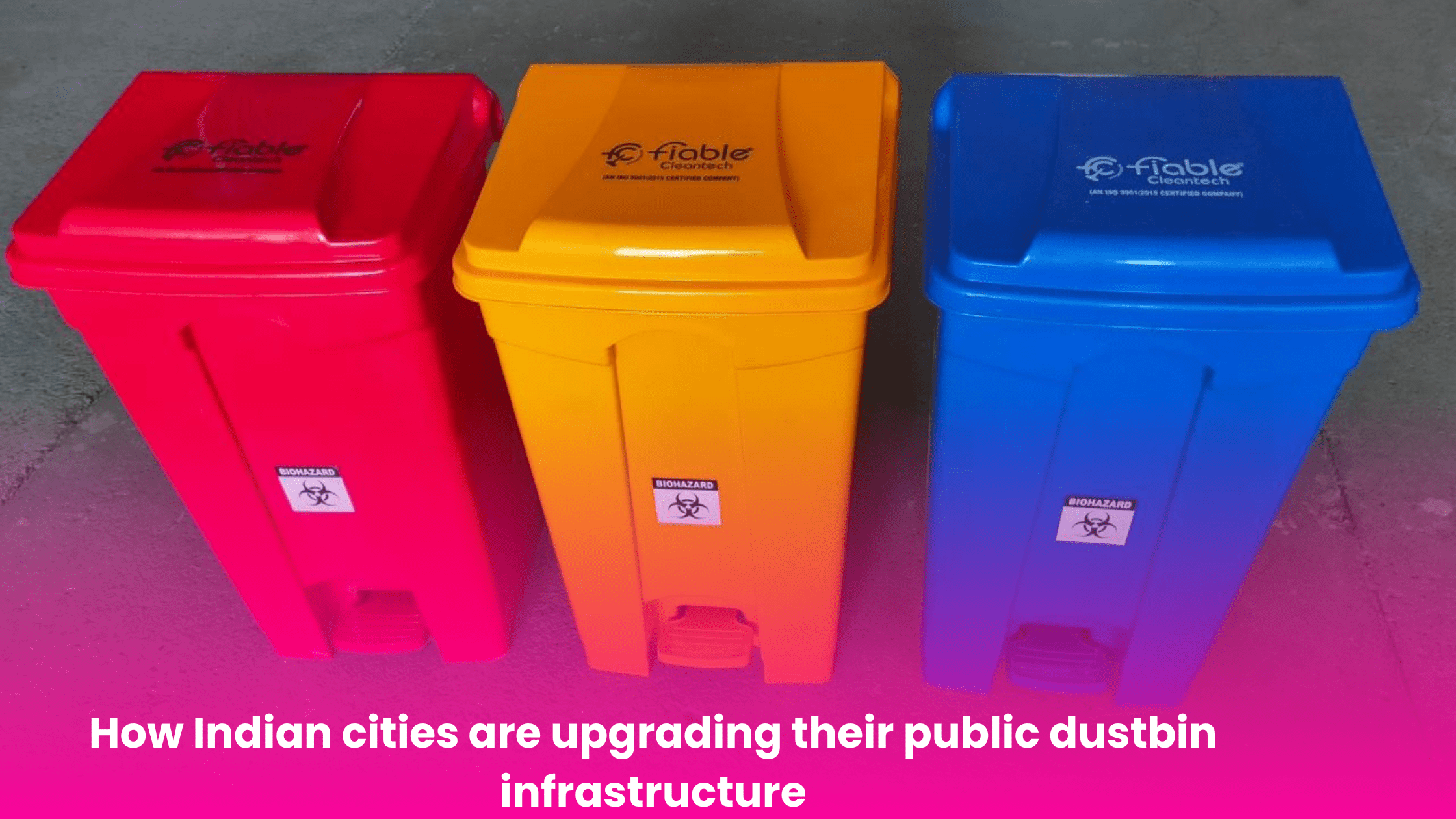
Another major improvement in public dustbin infrastructure is the emphasis on waste segregation. Cities are increasingly deploying color-coded bins to separate wet and dry waste.
This approach helps improve recycling efficiency, reduce landfill waste, and support sustainable waste management practices. Municipal authorities promote the use of separate bins for biodegradable and non-biodegradable waste to streamline processing and recycling efforts.
Integration of Technology in Waste Management
Technology is playing a crucial role in upgrading public dustbin infrastructure. Modern systems use tools such as GPS tracking for waste collection vehicles, RFID tags for monitoring bins, data analytics for route optimization, and AI-based systems for waste classification.
These technologies help urban local bodies improve efficiency, reduce operational challenges, and ensure timely waste collection. Cities adopting such innovations are witnessing better cleanliness and improved public health outcomes.
Expansion of Public Waste Infrastructure
Indian cities are also expanding their waste management infrastructure by installing more public dustbins in key locations such as markets, commercial areas, transport hubs, parks, and residential neighborhoods.
This expansion ensures that citizens have easy access to waste disposal facilities, reducing the chances of littering. In addition, municipalities are setting up collection and recycling facilities to support efficient waste processing.
Challenges Still Faced by Indian Cities
Despite significant progress, challenges remain in upgrading public dustbin infrastructure. Some of the key issues include inconsistent waste collection in certain areas, lack of awareness among citizens about proper waste disposal, maintenance and monitoring of public bins, and instances of illegal dumping.
Addressing these challenges requires better infrastructure, stricter regulations, and increased public participation.
Role of Private Manufacturers in Infrastructure Development
Private companies play an essential role in supporting urban waste management systems. As cities demand more advanced and durable solutions, manufacturers are developing innovative products that meet these needs.
Fiable Cleantech Limited is contributing to the development of modern public dustbin infrastructure by offering a wide range of high-quality dustbins for different applications. Their solutions are designed to handle both small-scale and large-scale waste requirements, making them suitable for urban environments.
Benefits of Upgraded Public Dustbin Infrastructure
The modernization of public dustbin infrastructure offers several benefits. It leads to cleaner cities by reducing littering and maintaining hygiene in public spaces. It improves public health by minimizing exposure to waste and reducing the risk of diseases.
It also increases efficiency by optimizing waste collection processes and reducing operational costs. Environmental sustainability is supported through proper waste segregation and recycling. Additionally, clean and well-maintained cities create a positive impression for residents and visitors.
Future of Public Dustbin Infrastructure in India
The future of public dustbin infrastructure in India will be driven by innovation and sustainability. Cities are expected to adopt advanced technologies such as AI-powered waste systems, automated segregation, solar-powered smart bins, and data-driven urban planning.
As urban populations continue to grow, the demand for efficient waste management solutions will increase. The focus will shift towards integrated systems that combine infrastructure, technology, and citizen participation.
Conclusion
Indian cities are steadily upgrading their public dustbin infrastructure to meet the challenges of modern urban living. From smart bins and advanced technologies to improved designs and expanded networks, these developments are transforming the way waste is managed in public spaces.
While challenges remain, the progress made so far highlights a strong commitment to cleaner and more sustainable cities. With continued efforts from government bodies, private manufacturers like Fiable Cleantech Limited, and active citizen participation, India is moving closer to achieving efficient and effective waste management systems.
Upgrading public dustbin infrastructure is not just about managing waste it is about building healthier, cleaner, and more livable cities for the future.