February 27, 2026
No Comments
As waste volumes increase across industrial, commercial, and municipal environments, the demand for high-capacity, mobile, and durable waste containers has become non-negotiable. Large plastic dustbins with wheels are no longer optional accessories—they are essential infrastructure for efficient waste handling. This blog builds on earlier discussions around waste management systems and focuses specifically on how large dustbins with wheels perform under heavy waste loads, why plastic remains the most reliable material, and how advanced wheel mechanisms ensure safety, efficiency, and long-term usability.
Manufacturers today must balance load-bearing strength, mobility, hygiene, and durability, especially in high-traffic environments. This is where modern industrial wheelie bins and robust dustbin trolley wheels play a critical role.
Traditional stationary waste bins fail in environments where waste output is continuous and heavy. Industries, housing societies, hospitals, malls, airports, warehouses, and municipalities require solutions that can:
Large plastic dustbins with wheels address all of these challenges. Their design supports both manual handling and automated lifting systems, making them suitable for modern waste management operations.
Plastic has evolved significantly in industrial applications. When engineered correctly, it offers advantages that metal and concrete bins simply cannot match.
Industrial-grade plastic dustbins are manufactured using high-density polyethylene (HDPE) or similar polymers. These materials provide excellent strength-to-weight ratios, allowing bins to carry heavy waste loads without cracking or deforming.
Unlike metal bins, plastic dustbins do not rust or corrode when exposed to moisture, chemicals, or organic waste. This makes them ideal for:
Despite their large capacity, plastic dustbins remain relatively lightweight. This reduces strain on workers and improves maneuverability, especially when combined with high-quality dustbin trolley wheels.
Smooth plastic surfaces prevent waste from sticking, making cleaning faster and more effective. This is essential for maintaining hygiene standards in regulated environments.
The performance of a large dustbin is only as good as its wheels. Dustbin trolley wheels are not simple accessories—they are engineered components designed to handle extreme loads and repetitive movement.
High-quality industrial dustbins use wheels that are:
In environments like factories or municipal waste collection points, poorly designed wheels can fail quickly. That’s why industrial applications demand wheels tested for endurance, weight tolerance, and surface adaptability.
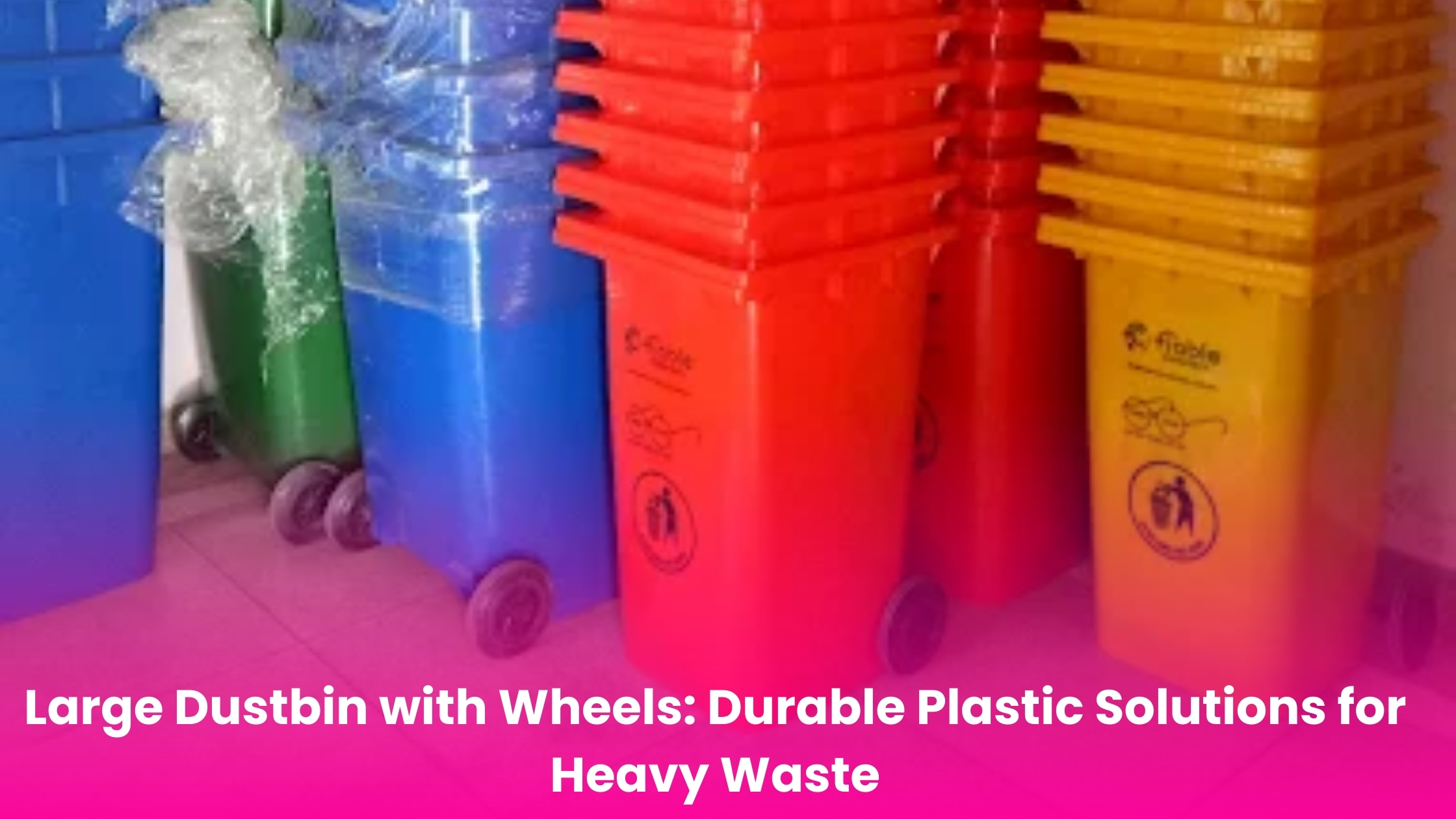
Industrial wheelie bins are specifically designed for large-scale waste generation. They combine high-capacity bodies with heavy-duty wheels to ensure efficient waste movement across large facilities.
These bins are widely used in manufacturing plants, logistics hubs, commercial complexes, hospitals, and urban waste systems.
The 240 litre dustbin is ideal for locations where space is limited but waste output is still significant.
Common Applications:
Key Advantages:
Despite its smaller size, when paired with strong dustbin trolley wheels, it performs reliably in daily operations.
The 660 liter dustbin is one of the most versatile options for industrial and municipal use.
Where It Excels:
Performance Highlights:
This size strikes a perfect balance between capacity and maneuverability, making it a preferred choice for many organizations.
When waste volumes are massive, the 1100 liter dustbin becomes essential. It is specifically engineered for extreme conditions.
Typical Use Cases:
Structural Advantages:
Even under extreme load, advanced dustbin trolley wheels ensure controlled movement and safety.
Poor-quality wheels can cause operational bottlenecks, injuries, and frequent maintenance costs. High-performance wheels ensure:
In large facilities, even a small improvement in wheel performance can lead to significant productivity gains.
Large dustbins with wheels are not just about capacity—they are about people. Ergonomic design reduces physical strain and prevents workplace injuries.
These features are especially important in environments with frequent waste movement.
Modern plastic dustbins are designed with sustainability in mind.
Large plastic dustbins with wheels contribute directly to cleaner, more efficient waste ecosystems.
A reliable manufacturer understands that different industries have different waste challenges. That’s why customization plays a key role.
Options often include:
As a trusted Indian manufacturer, Fiable Cleantech Limited focuses on delivering durable plastic solutions that meet both domestic and international quality standards.
One of the biggest advantages of plastic dustbins with wheels is low maintenance.
Over time, this results in significant cost savings for organizations.
As cities grow and industries expand, waste management systems must evolve. Large plastic dustbins with advanced wheel systems will continue to be a backbone of:
Investing in high-quality industrial wheelie bins and reliable dustbin trolley wheels is no longer a short-term decision—it’s a strategic move toward operational efficiency and environmental responsibility.
Large dustbins with wheels represent the intersection of engineering, hygiene, and practicality. From the compact 240 litre dustbin to the heavy-duty 1100 liter dustbin, each size serves a distinct purpose—but all rely on durable plastic construction and dependable wheel systems.
When designed and manufactured correctly, these bins simplify waste handling, protect workers, reduce costs, and support sustainable practices across industries.