
December 18, 2025
No Comments
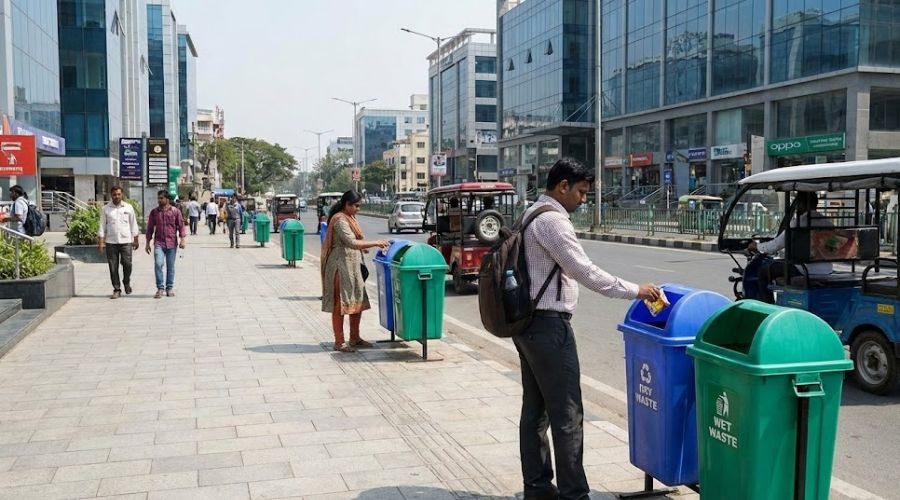
Plastic dustbins are essential for clean and organised spaces across India. You see them in homes, offices, schools, hospitals, parks, and public areas. As waste management needs grow, the demand for durable plastic dustbins also increases. Many people buy these products, but few understand how plastic dustbins are manufactured in India.
This blog explains the complete manufacturing process in simple language. It covers raw materials, machines, quality checks, and delivery. This guide helps buyers, businesses, and institutions make better decisions.
India generates a large amount of waste every day. Proper waste collection plays a key role in cleanliness. Plastic dustbins support this system by offering safe and hygienic storage.
Government cleanliness programs increased demand across cities and towns. Offices, factories, housing societies, and schools also place bulk orders. Because of this demand, plastic dustbin manufacturers focus on quality, scale, and fast supply.
Reliable manufacturers invest in better machines and skilled teams to meet these needs.
The manufacturing process begins with raw material selection. Manufacturers use strong plastic granules to make dustbins. HDPE and PP are common choices due to strength and flexibility.
A dedicated procurement team selects reliable suppliers. They test raw materials before approval. This step ensures consistent quality and long product life.
Good raw material improves durability and resistance. It also helps the dustbin handle daily use.
Manufacturers test plastic granules for strength and consistency. They check density, melting behavior, and color quality. This prevents defects during production.
Poor quality plastic can crack or fade quickly. Testing helps avoid these problems. Only approved materials move to the production floor.
Indian plastic dustbin manufacturers take this step seriously to maintain trust.
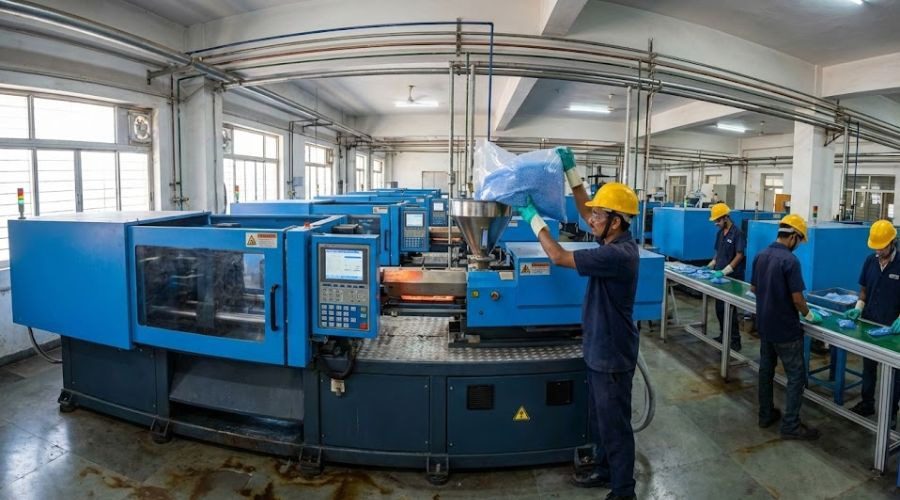
Workers feed approved granules into moulding machines. These machines heat the plastic at controlled temperatures. The plastic melts into a thick liquid form.
Operators monitor temperature closely. Proper heat ensures smooth melting. Incorrect heat can damage the plastic.
This stage prepares the material for shaping.
Injection moulding shapes the plastic dustbin. The machine injects melted plastic into a metal mould. The mould gives the dustbin its size and design.
Manufacturers use different moulds for different products. These include household bins, industrial bins, and wall mounted plastic dustbins.
Once filled, the mould remains closed for cooling.
Cooling allows the plastic to harden. The time depends on dustbin size and thickness. Larger bins need more cooling time. Proper cooling prevents cracks and shape issues. After cooling, the mould opens and releases the dustbin.
The dustbin now has its final form.
Newly moulded dustbins may have extra plastic edges. Workers trim these parts using tools. They smooth the surface for safety and appearance. Manufacturers then attach parts like lids, handles, wheels, or wall mounts. Each component fits carefully.
This step improves usability and finish.
Plastic dustbins come in various colours. Green, blue, yellow, and red are common. Manufacturers add colour during the melting stage. This ensures uniform colour throughout the bin. Many clients request custom colours and branding.
Manufacturers print logos and labels for identification. Branding helps with waste segregation and brand visibility.
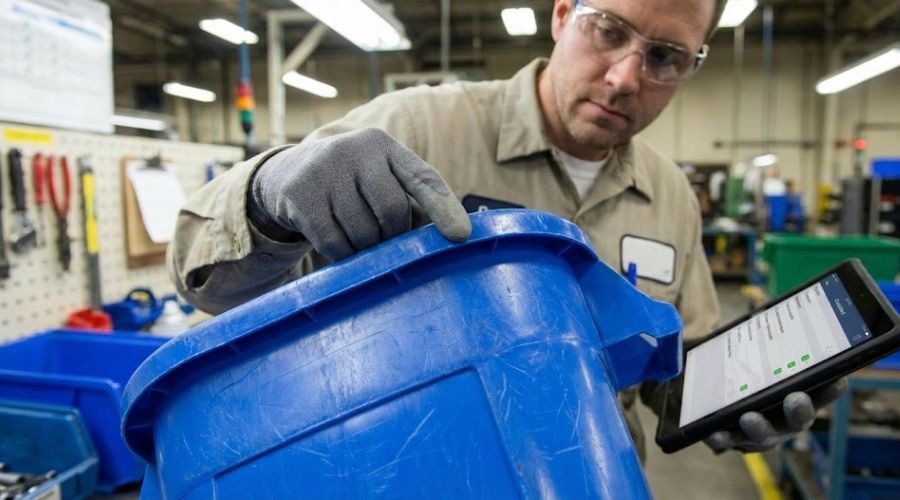
Quality teams inspect each batch of dustbins. They check size, shape, and surface finish. They also test load capacity and impact strength. Some dustbins undergo pressure and drop tests. These tests ensure safety during daily use.
Only approved products move to packing and dispatch.
Workers pack finished dustbins carefully. Proper packing prevents scratches and deformation. Bulk orders receive protective wrapping. Manufacturers store packed dustbins in clean warehouses. Good storage conditions maintain product quality.
Clear labeling helps manage inventory efficiently.
Plastic dustbin manufacturers use strong distribution networks. Logistics teams plan deliveries across cities and states. They handle urgent and bulk orders efficiently. Trucks transport products safely to client locations.
Timely delivery builds long term business relationships.
Choosing the right plastic dustbin manufacturer matters. Experienced manufacturers focus on quality, transparency, and ethical practices.
Companies like Fiable Cleantech Ltd follow strict procurement and testing processes. They use modern machines and trained teams. Their focus on timely delivery and quality makes them a trusted choice for businesses and institutions. Manufacturers such as Fiable Cleantech Ltd, support nationwide demand with durable plastic dustbins and reliable service.
Manufacturers produce many dustbin types. Household dustbins suit daily indoor use. Industrial bins handle heavy waste. Public place dustbins support outdoor waste collection. Wall mounted plastic dustbins save space in offices and washrooms.
Wheeled bins help in easy movement and cleaning operations. Custom sizes meet specific client needs.
Bulk orders require careful planning. Manufacturers schedule production based on order size. They ensure raw material availability. Quality checks remain strict even for large volumes. Logistics teams coordinate delivery timelines.
This system ensures smooth execution without delays.
Many manufacturers focus on sustainable practices. They reduce plastic waste during production. Some use recyclable materials where possible. Dustbin designs also support waste segregation. These efforts support cleaner cities and responsible manufacturing.
Sustainability now plays an important role in plastic dustbin production.
Manufacturers use HDPE and PP plastic. These materials provide strength, flexibility, and long lasting performance.
High quality plastic dustbins can last many years. Proper usage and storage increase their lifespan.
Yes, most plastic dustbins resist heat and moisture. They work well in outdoor conditions.
Yes, Indian manufacturers handle bulk orders regularly. They use planned production and modern machinery.
They test raw materials and finished products. Quality checks include strength and load capacity tests.
Many manufacturers offer custom colours, sizes, and branding. This helps meet specific business needs.
Manufacturers use strong logistics networks. They ensure safe and timely nationwide delivery.
Direct buying offers better pricing and quality control. It also improves communication and delivery speed.
Plastic dustbin manufacturing in India follows a detailed and careful process. Each step focuses on quality and efficiency. From raw material selection to final delivery, skilled teams manage production. Reliable manufacturers combine experience with technology. Understanding this process helps buyers choose the right supplier.
Plastic dustbins may look simple, but their manufacturing reflects planning, expertise, and responsibility.